

Vendor Intake Guide: 7 Steps of Supplier Selection

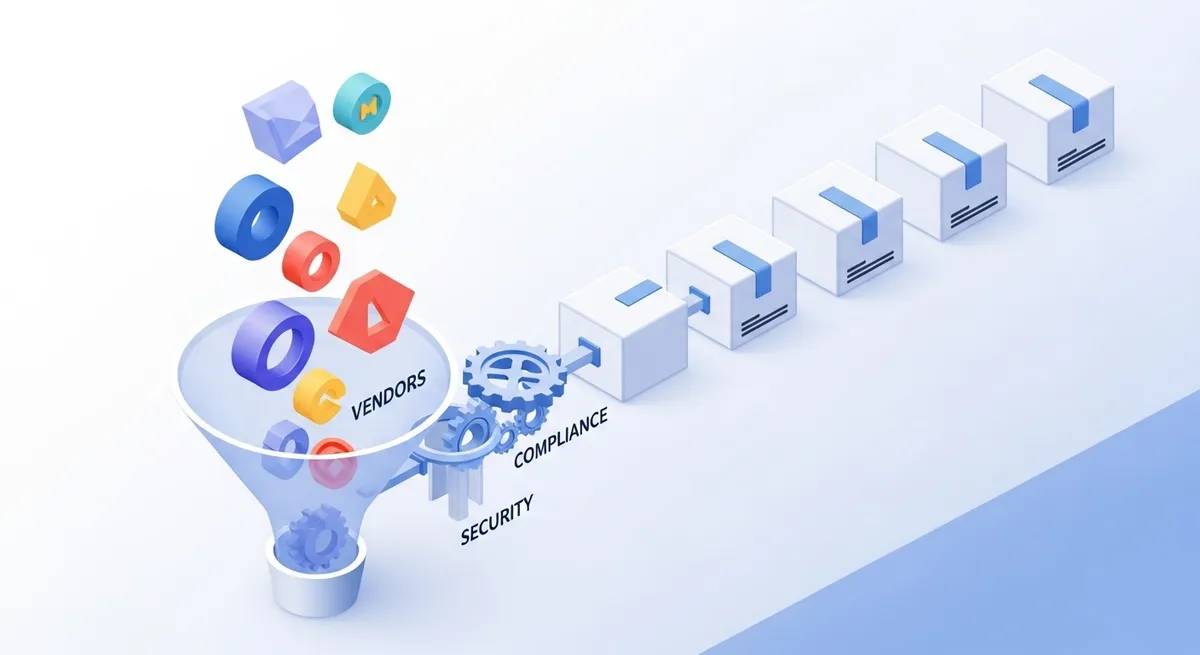
Table of Contents
The SME Guide to Vendor Intake: Mastering the 7 Steps of Supplier Selection
Efficient procurement is no longer just for enterprise giants. For Small and Medium Enterprises (SMEs), how you find, vet, and onboard suppliers (known as vendor intake) can determine your speed to market and profitability. Yet, many founders and operations managers still rely on chaotic email threads and various spreadsheets.
This guide breaks down the core principles of the supplier selection process, specifically tailored for growing businesses ready to professionalize their operations.
What is Vendor Intake?
Vendor intake is the initial phase of the procurement lifecycle where a business identifies a need, evaluates potential suppliers, and gathers the necessary data to officially add them to their payment and operational systems.
Ideally, this is a structured gateway. It ensures that every external partner from SaaS providers to raw material suppliers, is vetted for compliance, security, and quality before they ever send an invoice.
For SMEs, a poor intake process often leads to “shadow IT” (software purchased without approval), surprise costs, and significant compliance risks. Conversely, effective vendor onboarding sets the stage for a transparent, long-term partnership.
The Strategic Foundation: The 5 P’s of Procurement
Before diving into the steps of selection, it is vital to understand the strategic framework behind purchasing. Known as the 5 P’s of Procurement, these pillars ensure you aren’t just buying things, but building value.
| The 5 P’s | Definition | SME Focus |
| People | The stakeholders involved in the buying decision. | Involve the finance team early to ensure budget alignment. |
| Product | The specifications and quality of the goods/services. | Ensure the product scales with your growth (e.g., software seats). |
| Price | The total cost, not just the sticker price. | Look at Total Cost of Ownership (TCO), including implementation fees. |
| Place | Logistics, delivery, and distribution channels. | For digital services, this includes data hosting locations (GDPR compliance). |
| Process | The workflow for ordering and payment. | Crucial: Automate intake to avoid manual data entry errors. |
Understanding these pillars helps in segmenting your vendors effectively, ensuring you spend the most energy on the partners that matter most.
The 7 Steps of the Supplier Selection Process
A standardized workflow transforms chaos into clarity. While large corporations may have complex committees, SMEs can adapt these 7 steps of the sourcing process to be agile yet rigorous.
1. Needs Assessment and Specification
Everything begins with a clear definition of what you need. A vague request leads to vague proposals. You must define the technical requirements, the business problem you are solving, and your “must-haves” versus “nice-to-haves.” This is the time to consult internal stakeholders.
2. Market Research and Sourcing
Once you know what you need, scan the market. Who are the key players? For SMEs, peer reviews and industry referrals are gold. However, do not limit yourself to the first option you find. Create a “long list” of potential partners who appear to meet your criteria.
3. Vendor Evaluation and Due Diligence
This is the filter phase. You narrow your long list down to a short list. This involves requesting information (RFI) or proposals (RFP).
You should evaluate vendors based on:
-
Financial stability: Will they be around in two years?
-
Compliance: Do they meet vendor compliance standards?
-
Cultural fit: Are they responsive and easy to work with?
To make this objective, many ops managers use a weighted supplier selection matrix to score vendors numerically rather than relying on gut feeling.
4. Negotiation and Contracting
Once the top contender is identified, negotiation begins. This isn’t just about beating down the price. You must negotiate payment terms (e.g., Net 30 vs. Net 60), service level agreements (SLAs), and termination clauses. A well-negotiated contract protects your cash flow and reduces legal exposure.
5. Final Selection
With terms agreed upon, you make the final decision. This step often requires sign-off from finance or the C-suite, depending on the contract value. Documentation is key here: you need a paper trail showing why this vendor was chosen over others for audit purposes.
6. Vendor Intake and Onboarding
This is the critical handover. The vendor is “selected,” but they are not yet “active.” You must now collect:
-
Tax forms (W-9, W-8BEN).
-
Banking details for ACH/Wire transfers.
-
Insurance certificates.
Using a vendor onboarding checklist ensures you don’t miss critical documents that could delay payments or cause tax issues later.
7. Performance Management and Review
The process doesn’t end at signing. You must regularly review if the vendor is delivering on their promises. Are they hitting their SLAs? Is the quality consistent? Measuring vendor performance ensures you are getting ROI and helps you decide whether to renew or terminate the contract when the time comes.
Why Manual Intake Processes Fail Growing Businesses
Many SMEs try to manage the 7 steps above using email and local folders. This approach inevitably breaks as you scale.
-
Data Fragmentation: Vendor data lives in the Head of Marketing’s inbox, not the Finance system.
-
Compliance Gaps: Expired insurance certificates or missing tax forms go unnoticed until an audit hits.
-
Slow Velocity: It can take weeks to onboard a new freelancer or tool, slowing down your team’s ability to execute.
-
Fraud Risk: verifying bank details via email leaves you wide open to invoice fraud and phishing attacks.
Transitioning from a manual to an automated evaluation process is often the first step toward maturity for finance operations.
How Vendorfi Streamlines the Vendor Intake Process
If the 7 steps sound like a lot of administrative work, that is because they are: if done manually. Vendorfi is designed to remove the friction from this workflow.
Instead of chasing stakeholders for approvals and vendors for documents, Vendorfi centralizes the entire intake lifecycle:
-
Customizable Risk Requirements: Set mandatory governance standards like ISO or SOC2 upfront, ensuring vendors meet your specific data safety protocols before onboarding.
-
Automated Verification: The system checks documents and ensures nothing is missing before the vendor is active.
-
Audit-Ready Trails: Every decision, document, and approval is logged automatically, making due diligence effortless.
-
Seamless Integration: Data flows directly into your ERP or accounting software, eliminating manual entry errors.
By automating the administrative burden, your team can focus on the strategic aspects of the 5 P’s, negotiating better prices and building stronger relationships, rather than chasing email attachments.
Conclusion
Mastering the vendor intake process is a competitive advantage. It allows your business to partner with the best suppliers quickly while keeping risks low. By understanding the 5 P’s of procurement and following the 7 steps of supplier selection, you build a robust supply chain that supports growth.
However, processes without the right tools can become a bottleneck. Modernizing your intake with automation ensures that your procurement strategy is an accelerator for your business, not a brake.
Frequently Asked Questions (FAQ)
What is the difference between sourcing and procurement?
Sourcing is the strategic process of finding and vetting suppliers (Steps 1–5). Procurement is the broader function that includes sourcing but also covers the transactional aspects like purchasing, payment processing, and contract management.
Why is the vendor intake process important?
A structured intake process mitigates risk (fraud, compliance), ensures data accuracy for payments, and speeds up the time it takes to start working with a new partner. It prevents “rogue spending” within the company.
What documents are typically required for vendor onboarding?
Standard documents include tax identification forms (W-9/W-8), banking details, proof of insurance, and any necessary regulatory certifications (like ISO or SOC2 for software vendors).
How can I improve my supplier selection process?
Start by defining clear requirements before searching. Use a weighted scoring matrix to remove bias, and automate the administrative intake steps to ensure you have time for proper negotiation and relationship building.
About Vendorfi Team
The collective voice of our product, engineering, and operations teams, sharing insights to help you build better vendor relationships.
Manage your entire vendor lifecycle, from procure to pay - for free.
See how Vendorfi's automated platform can help you manage risk and reduce spend across your entire vendor portfolio.